Available courses

Action Research in Education is a practice-oriented core course designed for in-service teachers enrolled in the MA in Education programme through hybrid mode, offering a flexible and professionally relevant pathway to develop research competencies without interrupting their teaching careers. The course introduces students to the conceptual foundations, historical evolution, and key methodologies of action research, with a strong emphasis on its application in real classroom and school contexts. This course bridges the longstanding gap between educational theory and everyday teaching practice by placing teachers at the centre of inquiry, aligning with national mandates for evidence-based teaching and continuous professional development while empowering them to address contextual challenges autonomously. The primary objectives of the course are to develop students' ability to identify researchable classroom problems and formulate focused research questions, to equip them with qualitative and mixed-method data collection and analysis techniques suited to school settings, to guide them through planning, implementing, and evaluating complete action research cycles, and to foster a culture of reflective practice and peer collaboration through structured online learning communities.  On successful completion of the course, in-service teachers will be able to critically examine and improve their own teaching strategies through systematic self-inquiry, design and conduct independent action research cycles within their school environments, collect and interpret classroom data to make informed instructional decisions, identify context-specific pedagogical challenges and implement targeted theory-informed interventions, engage meaningfully with peer learning communities to share and refine professional practices, and prepare action research reports suitable for school-level dissemination, seminars, or publication. Altogether, this course transforms participating teachers into reflective, research-literate professionals who are equipped not only to improve their own classrooms but also to contribute to broader school improvement and educational reform efforts.

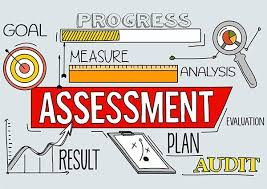
Educational Assessments I is a foundational course designed to deepen educators’ understanding of assessment as a powerful tool for learning within the IB Middle Years Programme (MYP) and broader educational contexts. Grounded in research, IB philosophy, and inclusive practice, the course examines how assessment can move beyond measurement to actively promote student growth, agency, and equity.

Across seven weeks, participants critically explore the purposes and types of assessment, the role of learning outcomes and criteria, and the design of formative and summative tasks that support diverse learners.

CO1: Comprehensively examine the purposes and types of assessment in educational contexts.
CO2: Analyse the role of learning outcomes and assessment criteria in measuring student progress.
CO3: Design formative and summative assessment tasks that support learning and inclusion.
CO4: Evaluate strategies to ensure validity, reliability, and fairness in assessment practices.

This course is to establish how the foundational elements of IB are interwoven in its pedagogies and practices. This course offers a comprehensive understanding of widely used pedagogical approaches and practices for practising/aspiring IB educators.

IB-school-eeducation-UAE.jpgIB-school-eeducation-UAE.jpg

This course is a foundational course to introduce the basics of the International Baccalaureate - the history, the philosophical approach, the essential elements and the approaches of teaching-learning.

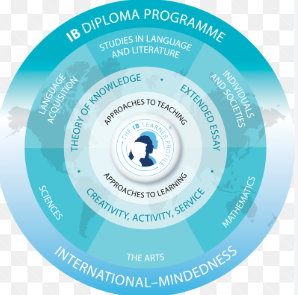
This module introduces candidates to the foundational principles, pedagogies, and practices that inform teaching and learning in the DP. Participants will engage with the IB’s educational philosophy, explore Approaches to Teaching (ATT) and Approaches to Learning (ATL), and develop strategies to design inquiry-based, concept-driven, and internationally minded learning experiences.

Course Objectives: 

CO1: Analyse teaching philosophies to inform pedagogical decisions.

CO2: Critically examine key learning theories and their relevance to diverse learners.

CO3: Interpret IB philosophy to support inclusive and internationally minded teaching.

CO4: Reflect on personal beliefs to articulate a teaching and learning philosophy.

Facilitator: Chandreyee Das Gupta 

Course Duration: 7 Weeks

Learning Engagements: Readings, Discussion Forums, Independent Reflective Tasks, group projects

Assessments: Portfolio, Processed Research Papers

A comprehensive course exploring key learning theories and their application in IB education. Learners reflect, compare, and apply theories to teaching practices supporting inclusivity, international-mindedness, and inquiry.

This course aims to:

  • Critically examine key learning theories and their relevance to diverse learners.

  • Analyse teaching theories to inform pedagogical decisions.

  • Interpret IB philosophy to support inclusive and internationally minded teaching.

  • Reflect on personal beliefs to articulate a teaching and learning philosophy.

Facilitator: Kriti Gulati
Duration: 7 Weeks
Assessment Style: Discussions, Written Tasks, Presentations, Portfolio
Reference Style: APA 7th

Weekly tasks include readings, discussions, reflections, written assignments and Portfolio tasks aligned with IB principles.